
Imagine tapping your phone to pay a friend $20 for coffee, then seeing a surprise fee that shrinks the amount. That mismatch is what most people feel first when they switch from cash to digital payments fees.
Digital payments are usually apps, cards, and online transfers that move money fast. Sometimes you pay nothing. Other times, the cost shows up when you choose speed, funding method, or a business checkout.
If you want to avoid extra charges, you need one simple view: who charges, when they charge, and what part of the transaction creates the fee.
Fees You Might See When Sending or Receiving Money
On the consumer side, the good news is simple: many everyday sends are free. Most major apps let you send money from a linked bank account or debit card at no cost.
The catch is speed and funding type. When you pick an instant option, or you fund with a credit card, fees can kick in right away. In March 2026, instant cash-outs are commonly around 1% to 3%. Credit card funding can be higher, so you want to check your app before you tap send.
Here’s a quick way to think about it. Fees act like a toll. Standard transfers take the “main roads” (bank timing). Instant transfers use the “express lane,” and someone charges for that speed.
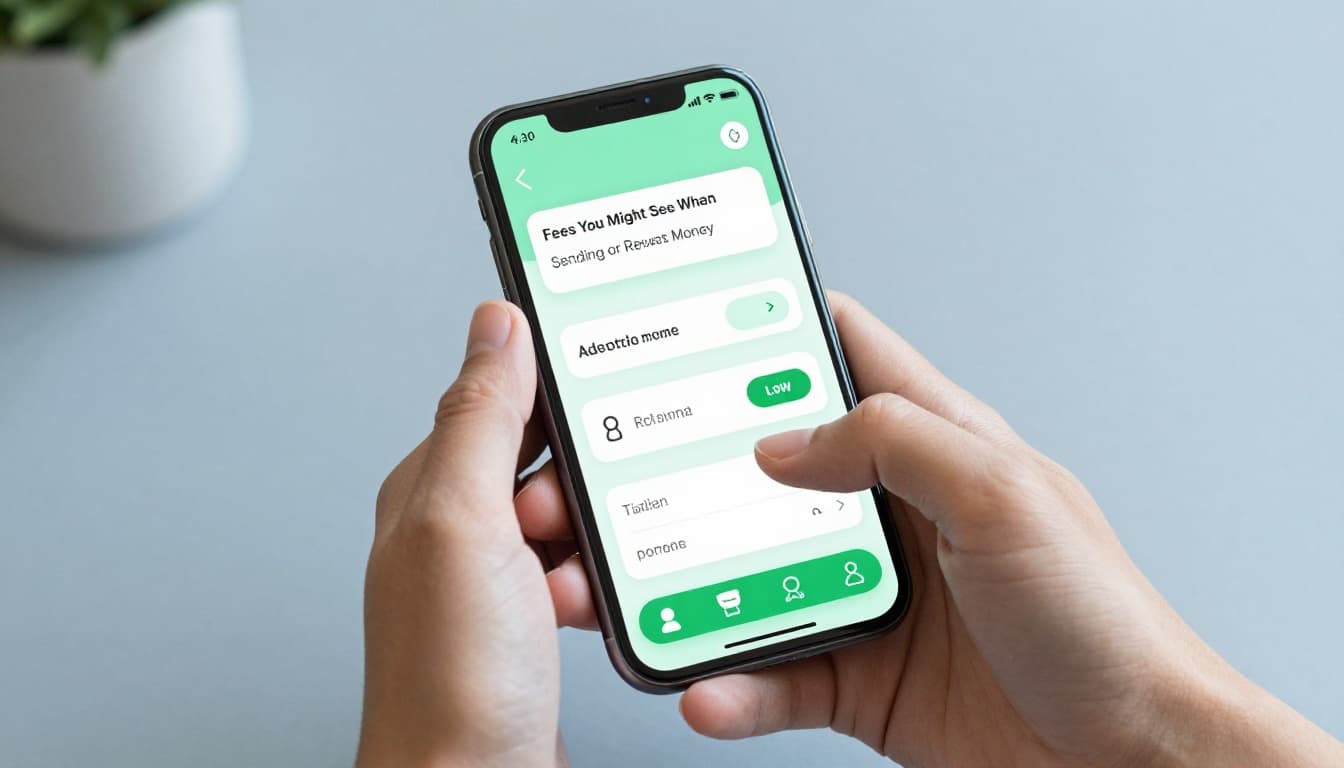
Also note a common confusion: digital wallet apps (like Apple Pay or Google Pay) often do not add their own fee. Instead, they pass along the cost tied to the card network or the payment method you’re using.
If you want a side-by-side view of how popular apps charge, this fee breakdown is a helpful reference: Venmo vs PayPal vs Cash App fee comparison.
Instant Transfers in Apps Like Venmo and Cash App
Instant transfers are where most surprises happen. When you move money from your app balance to your bank right away, the app usually charges a percent. In March 2026 reporting, typical instant fees fall around 1% to 3%, with caps or minimums.
At the same time, standard transfers often take 1 to 3 business days and can be free. So the decision is basically this: “Do I want speed, or do I want no fee?”
A few real-life examples, based on March 2026 fee patterns:
- $50 instant send: if the instant fee is around 1.75%, you might see about $0.88 (and apps may round or apply caps).
- $100 instant send: a 1.75% fee could land around $1.75.
- Credit card funding: fees can jump to about 3% on some apps, so the same $20 payment could cost more than you expected.
Apps also differ in how they calculate minimums. That’s why two people can send the same amount and see different fee results.
If you see an “Instant” toggle, treat it like choosing a paid ticket, not a free upgrade.
For a broader comparison of which app works cheapest for typical P2P habits, see best P2P payment apps 2026 comparison.
Digital Wallets Such as Apple Pay and Google Pay
Digital wallets feel like their own category, but the fee story usually follows the card behind them.
In most cases, you pay no extra fee just for using Apple Pay or Google Pay. Instead, costs show up based on what your payment method is. For example, you might avoid a wallet fee, but still pay a card-related cost if the underlying funding choice triggers one.
This matters most when you use a wallet in a store. The merchant pays the card processing cost. As a shopper, you usually only see the fee if a merchant tries to add it to you.
For many debit-friendly setups, the wallet experience feels like “free checkout.” You buy groceries, pay with your phone, and you walk out without a line item that says “payment fee.”
The Real Costs Businesses Face Accepting Digital Payments
If you run a small business, you feel digital payments differently. Consumers look at app fees. Businesses look at the full transaction math.
For many small merchants in the US, the blended cost for cards can average roughly 2% to 3.5% per transaction in March 2026. That blended number often includes the big parts of processing, plus network and processor charges.
A helpful way to picture it: a card payment usually has a “split pot.” Multiple parties take their share before your deposit hits your account. That’s why fees can look small as a percent, but still add up fast at scale.
Let’s do simple math. If a customer pays $100, and your blended rate is 2% to 3.5%, you might pay $2 to $3.50 in processing fees.
For shop owners, transparency also matters. Many places allow credit card surcharges under state rules, but merchants generally must disclose them clearly. Debit often cannot be treated the same way. So the fee you see depends on whether the card type is credit or debit.
Breaking Down Credit Card Processing Fees
Credit card processing usually includes these components:
- Interchange: set by the card networks and tied to card type and rewards.
- Assessments: network fees and program costs.
- Processor markup: what your payment provider charges to run the service.
Interchange can be the largest part. For a lot of transactions, it makes up the majority of what you pay. That’s why businesses often can’t “negotiate interchange away.” Processors can compete on their markup, but network costs stay.
Card rewards also play a role. A premium rewards credit card can cost more than a basic debit transaction. So two “identical” purchases can settle with slightly different fees.
Popular Processors Like Stripe and Square
Stripe and Square are common choices because they’re easy to start with. Still, ease of use doesn’t mean low cost. Most businesses pay a percent plus a fixed amount, depending on card type and sales channel.
In March 2026 comparisons, typical advertised rates often land near 2.9% + $0.30 for online card transactions with Stripe-style pricing, while Square can be around the 3%+ range plus a fixed per-transaction amount.
If you want a practical breakdown of Square cost components, check Square fees calculator and pricing for 2026 (NerdWallet).
For small shops, the best move is usually to request volume-based options. As your sales grow, fees can drop. When you’re choosing a provider, also ask about:
- monthly pricing,
- chargeback handling,
- hardware costs (if you use a reader),
- and dispute fees.
Other Fees to Watch in Transfers and Beyond
Not every digital payment uses card rails. So don’t assume one fee pattern fits all.
Here are the big “beyond P2P” costs to watch:
- ACH transfers (bank-to-bank) are often cheap, and consumer transfers can look free.
- Real-time bank payments (like FedNow) can cost more than standard ACH, but still usually less than cards.
- PayPal can be free for some person-to-person sends, while merchant transactions tend to follow card-like blended rates plus fixed fees.
If you use “Pay by bank” options, you can often skip some of the higher card interchange cost. That’s why bank-funded transfers can feel cheaper for big moves like rent or payroll.
ACH Transfers and FedNow Updates
ACH is the slow lane compared to instant transfers, but it’s often the cheapest. For many accounts and apps, standard ACH moves funds in about 1 to 3 business days.
FedNow is the real-time option that targets faster bank payments. Pricing depends on your financial institution and how the service is set up. For the most direct public reference, the Federal Reserve publishes schedules, including FedNow Service 2026 fee schedule.
For businesses, real-time bank payments can help reduce exposure to card fees. For consumers, the value shows up when instant bank options cost less than instant card-based cash-outs.
PayPal Specifics for Buyers and Sellers
For buyers, PayPal often feels like “no extra step” when you pay with balance or a linked method. For sellers, PayPal merchant fees can include a percent plus a fixed fee per transaction.
In practice, PayPal’s seller costs can often sit in the 2% to 3%+ range with fixed charges. International payments usually add more fees, too. So the fee you get depends on whether you’re sending money, receiving money, or processing sales.
If you use PayPal for small purchases between friends, check whether your payment is treated as P2P or goods and services. The difference changes who pays the cost.
2026 Trends and Tips to Cut Digital Payment Fees
In 2026, the theme is clearer pricing. Apps are showing fees upfront more often, and merchants are getting pushed to explain surcharges in plain language.
At the same time, more options exist for lower-cost transfers. Real-time bank payments, debit-first setups, and “pay by bank” buttons can reduce how often you pay card-like rates.
Here are practical ways to cut costs without changing your whole life:
- Use standard transfer options when you can wait, not “instant.”
- Prefer debit or bank funding over credit card funding for P2P.
- For big payments, ask if ACH or bank transfer works in your situation.
- For merchants, shop around and renegotiate as volume grows.
- Keep a close eye on credit surcharges, since rules vary by state.
Also, scan your app settings. Some apps change default funding methods. That one tap can decide whether you pay a percent fee.
Digital payments save time, but speed and credit funding often create fees. Check the toggle before you hit send.
Conclusion
Digital payments fees aren’t random. On the consumer side, many sends are free, then instant options and credit card funding add costs. For businesses, blended card processing often lands around 2% to 3.5% per transaction in March 2026.
The biggest win is simple: check the funding choice and the speed option before you confirm. Once you do that, fees stop feeling like a mystery.
Audit your last few payments this week and see where the charges came from. If you want more money-smart tips, subscribe to the newsletter for practical finance help, and share your best fee-saving trick in the comments.