Imagine you tap send on a payment app, then realize seconds later you picked the wrong person. That sinking feeling is real. It happens every day with Zelle, Venmo, Cash App, PayPal, and bank transfers.
The good news is you may still fix it. The bad news is recovery depends a lot on timing, and whether the other person already spent the money.
So what actually happens after you send money to the wrong person, and what should you do next? Let’s walk through the clockwork of recovery, then cover your legal options and the scams to avoid.
The Clock Starts Ticking: What Happens Right After You Send Money to the Wrong Person
P2P payments move fast. For many users, Zelle feels instant, and Venmo and Cash App are quick too. Bank wires can also move the same day. ACH usually takes longer, often 1 to 3 business days. Checks move the slowest.
Once funds land in the wrong person’s account, it’s like the money slips into a pocket you can’t easily reach. You might still recover it, but the rules change fast.
Here’s the key problem: most payment apps don’t offer an “automatic refund” when you made a mistake. Even if you contact support, the app may only be able to request a return. If the recipient already accepted or completed the payment, you’re often asking for cooperation, not pulling a reversal lever.
Also watch for notifications. Most apps send emails or in-app alerts when a payment completes, and that timing matters for disputes.
If you want a quick refresher on how these apps treat wrong-recipient payments, see what to do after sending money to the wrong person.
Steps to take in the first hour
Do these right away. Don’t wait for “maybe they’ll notice.”
- Screenshot everything: the recipient, amount, time, and payment confirmation.
- Copy the transaction details: transaction ID, note, and any reference number.
- Contact the payment service support immediately: ask what cancellation or recovery options exist for your specific status.
- Message the recipient clearly (only if you know them): state it was a mistake and ask for a refund.
- Do not send “extra” money: never pay “fees” to get your money back.
Act quickly because support can only work with what hasn’t settled yet. After that, the other person becomes the biggest factor.
Your Shot at Recovery: Steps and Odds for Zelle, Venmo, PayPal, Cash App, and More
Your best chance to recover mistaken payment money usually follows one rule: it must still be recoverable in the payment system.
In other words, the money can be easier to retrieve if it’s still pending, unclaimed, or not fully completed. If it already completed and the recipient accepted, you’re usually relying on their voluntary return.
A simple way to picture it: some payments are like a package still on the shelf. Others are like a package already delivered and opened.
Here’s a practical “where you stand” guide.
| Payment method | What matters most for recovery | Typical outcome if already completed |
|---|---|---|
| Zelle | Whether the recipient has enrolled and accepted | Usually difficult, depends on bank handling |
| Venmo | Whether the recipient accepted and has the funds | Often requires recipient refund |
| Cash App | Payment completion status | Often requires recipient refund |
| PayPal | Whether it’s unclaimed vs completed | Disputes may help if you act quickly |
| ACH / wires / checks | Processing stage and your bank’s cutoffs | Reversals depend on timing and bank rules |
Now let’s get specific. Timing is everything, but so is the exact button you hit and the status your payment shows.
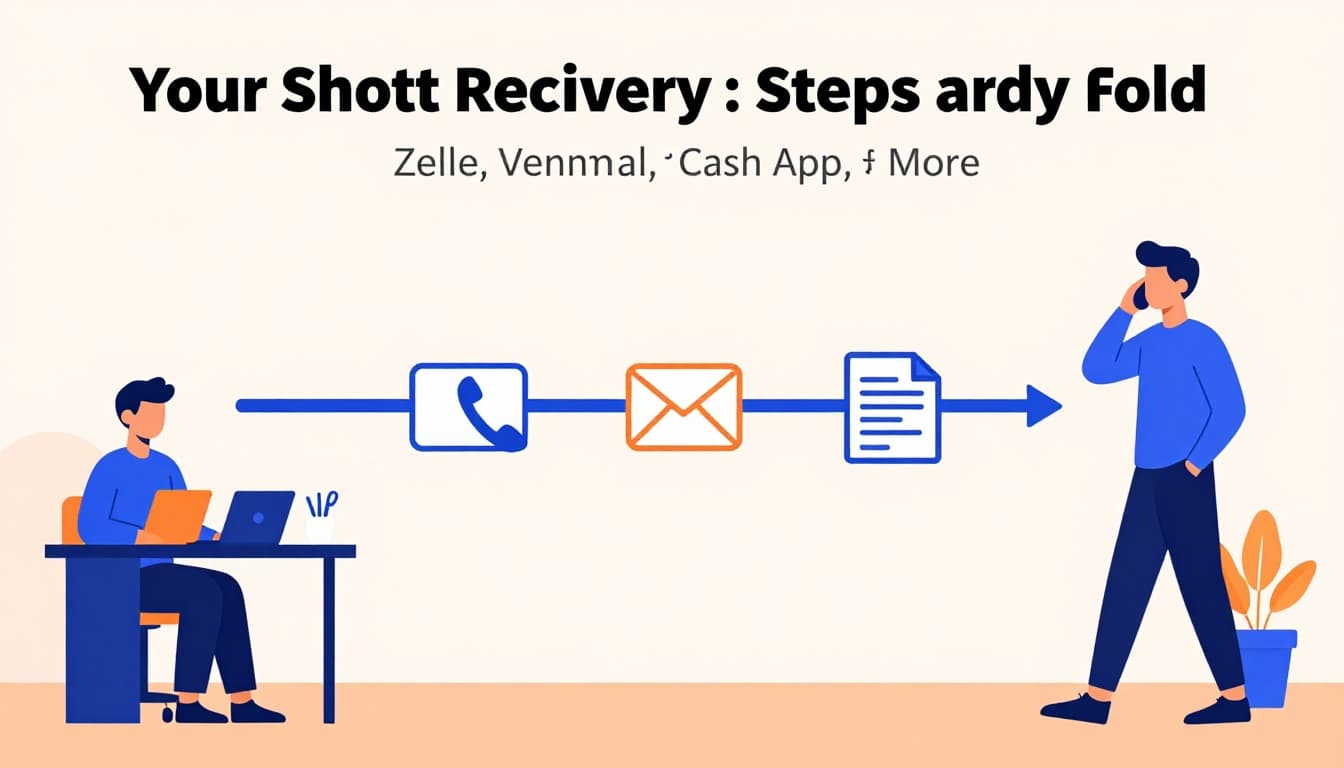
What to say to support (use this script)
When you contact support, keep it short and accurate. Include:
- That you sent money to the wrong person
- The transaction ID and amount
- The exact time you sent it
- Whether the payment shows completed, pending, or unclaimed
If you want guidance on how Zelle recovery works when you authorized the payment, see can you get your Zelle money back.
Zelle: Call Your Bank Immediately for the Best Chance
Zelle works through participating banks, so your bank’s process matters. First, check whether the recipient has already enrolled and accepted. If the payment hasn’t landed, cancellation may be possible.
If the recipient already accepted the money, reversals get much harder. Zelle generally treats authorized transfers as final, and the other person’s agreement becomes the deciding factor.
Do this fast:
- Call your bank’s number from the back of your debit card or the bank site.
- Tell them you need help with a wrong-recipient Zelle payment.
- Ask whether they can request a recall from the recipient’s bank.
If the person agrees, recovery can happen. If not, you may be stuck trying to dispute through your bank, but your odds usually drop after funds are spent.
A practical truth: Zelle is great for speed, which also makes mistakes expensive when you act late. That’s why “call now” beats “wait and see.”
Venmo and Cash App: Report in App and Hope It’s Not Spent
Venmo and Cash App both make it simple to send money. That simplicity also means mistakes can “complete” quickly.
For Venmo, you should report the wrong payment in the app right away. Venmo’s own help guidance notes what to do after you paid a stranger by mistake. Start there, because they route you to the right workflow. See Venmo’s help on paying a stranger.
Then:
- Ask support what “reversal” means for your payment status.
- Message the recipient with a refund request, only if you know them.
- Monitor your account for any extra charges related to disputes.
For Cash App, the message is similar. Once the payment is complete, your path usually becomes a direct refund request. If it’s still pending, there may be more room to fix details, but you must act quickly.
Also watch for “recovery” scams. More on that in the next section.
PayPal: Strongest Recovery If You Act Within Days
PayPal’s biggest advantage is that the payment status can give you options. When a payment is marked as unclaimed, you may be able to stop it before it completes. If it already completed, you’ll usually need the recipient to refund you, plus you can consider a dispute.
Start with PayPal’s official steps for wrong-recipient payments: what to do after sending money to the wrong person.
Then:
- Open a case quickly (don’t wait weeks).
- Use the transaction ID and time.
- Keep your tone factual. Avoid threats or insults.
Even when PayPal can’t guarantee a return, acting fast gives you the best chance to file within any time windows.
Bank Transfers, Wires, and Checks: From High to Low Odds
If you used a traditional bank method, don’t assume you’re out of luck. But do assume timing matters.
- ACH: If your payment is still processing, banks may have reversal options. Once it posts, recovery may require the receiving bank to coordinate a return. Some banks also let you request a stop. For a general overview of how ACH reversals work, see how to stop or reverse ACH payments.
- Wires: Wires can be hard to reverse. Sometimes your bank can act quickly if the receiving bank hasn’t picked up the funds yet.
- Checks: If a check is still uncashed, you can often stop payment. That doesn’t erase the mistake, but it can prevent the wrong person from cashing it.
Also contact the receiving institution when possible. If you have the routing and account details (or the name on the account), ask your bank what they can verify.
In short, bank transfers are not always “automatic recovery,” but they can be more structured than P2P apps when you move early.
If They Refuse to Return It: Know Your Legal Rights in the US
If you asked politely and they refuse, you still have options. In the US, your situation often turns on a legal idea called unjust enrichment. The basic concept is simple: someone shouldn’t keep money that they received by mistake.
There’s also a federal layer that can help when you made an error sending money. If you made an error with an electronic transfer, the Electronic Fund Transfer Act requires your bank to investigate. You also may have the right to submit a written notice of error to the transfer provider.
That said, there’s no magic button that forces a refund. The other person may claim they believed the funds were theirs. Still, courts often look at facts and intent, especially when the payment was clearly wrong.
Small claims court can be a real option
For many cases, small claims is the practical route. Limits vary by state, but many places cap it around $5,000 to $10,000.
Here’s how it usually plays out:
| Option | Pros | Cons |
|---|---|---|
| Demand letter | Low cost, creates a paper trail | No guarantee they respond |
| Small claims court | You can ask for repayment | Time and effort, still not guaranteed |
| Dispute with your bank | Can work if rules allow it | If the payment was authorized, outcomes vary |
| Criminal route | Usually only for fraud | Most “wrong person” mistakes are not criminal |
If you go forward, bring proof. Think: screenshots, transaction IDs, dates, and your messages to the recipient. Keep everything organized.
Courts generally don’t reward honest mistakes. They also don’t like keeping money sent in error.
Lessons from Real Mistakes and Sneaky Scams
Sometimes the wrong-person message is real. Other times, it’s a trap.
One of the most common traps is the “mistaken payment recovery” scam. Here’s the pattern:
- A scammer sends you money and calls it an “error.”
- They push you to return it right away.
- Then they claim the original payment was fraudulent.
- Your bank or the app takes money back from you, while the scammer disappears.
In other words, you end up paying them to undo their own scam.
Another version targets your trust. A message might say, “Your account is locked. Send money to fix it.” Or they impersonate “support” and ask for personal info.
Treat these signals like a red flag:
- They rush you with urgency.
- They ask you to return funds in a weird way.
- They won’t let you use official support channels.
- They message you from a random account with no real history.
Instead, use official steps:
- Report scams to the company using in-app help.
- Report fraud to the FTC, too, using what to do if you were scammed.
For extra context on “overpayment” style traps, see overpayment scams and how to fight back.
Also, don’t confuse two scenarios:
- You accidentally sent money: recovery depends on payment status and support options.
- Someone says you received money by mistake: you should not return it without verified confirmation through official channels.
A good rule: if it feels rushed, slow down and verify.
Prevent Future Panic: Simple Habits to Never Send Money to the Wrong Person Again
Once you’ve been through it, you start watching your taps. That’s smart.
Here are habits that work because they add friction at the right moment.
- Triple-check the recipient: name, profile, phone, or email. Small differences matter.
- Send a small “test” first: especially with new people. Test beats regret.
- Use the request money feature when you can. Requests give you control over the who and what.
- Turn on confirmations if your app offers them. Alerts help you catch mistakes fast.
- Review recent activity daily. You’ll spot issues before they snowball.
- Avoid copying and pasting contact info from messy places. A single digit can break everything.
Also, trust your first instinct. If you feel unsure after tapping send, don’t brush it off. Open the payment details and confirm the recipient right away.
Getting the habit right means you lose less money to simple human errors.
Conclusion: Recovering a Mistaken Payment Comes Down to Speed
That moment when you send money to the wrong person is scary, but you’re not helpless. The biggest factor is speed, especially before a payment fully completes.
Next, focus on the right recovery path for your method. Zelle, Venmo, Cash App, PayPal, and bank transfers all have different rules. If you act fast, you maximize your chances of a recovery and reduce the risk of “no refund” outcomes.
Finally, remember the scams. If someone tries to get you to return money through unofficial steps, stop and verify. Most cases that go well happen because the sender acts quickly and uses official channels.
If you’ve ever dealt with a mistaken payment recovery, share what happened in the comments. What app was it, and how fast did you contact support?