Paying your friend back, splitting dinner, or buying concert tickets last-minute feels simple now. You tap a few buttons, and the money shows up fast.
Peer-to-peer payment systems are ways to send money directly from one person to another using an app, without needing to write a check or visit a bank branch. People use them for quick, everyday stuff because they’re easy and usually low-cost.
In 2026, they matter more because the market keeps growing. The global P2P payments market is estimated at about $4.48 billion in 2026, up from $3.75 billion in 2025, with strong yearly growth driven by more smartphones and digital money use.
Next, you’ll see what P2P really means, how a transfer moves from your phone to theirs, which apps are popular in different regions, and how to stay safe as scams evolve.
What Exactly Are Peer-to-Peer Payment Systems?
At its core, a peer-to-peer (P2P) payment lets you send money from your account to someone else’s account. You do it through a phone app or website, and you usually identify the person by their phone number, email, or username.
That’s why P2P can feel like “digital cash,” but it’s more traceable. You’re not handing over bills. Instead, the app routes the transfer through the payment network behind the scenes.
To ground it in a simple definition, PayPal explains P2P as direct digital payments from one person’s account to another. In other words, you send money to a person you trust, and they receive it quickly.
You’ll often see terms like account-to-account. That just means the money moves between financial accounts tied to people, not between random cards or paper receipts.
Here’s what P2P systems typically handle well:
- Person-to-person payments for friends, family, roommates, and coworkers
- Quick transfers without cash or checks
- Mobile-first access, which can help people who don’t use cash as much
- Built-in receipt records, so it’s easier to remember who paid whom
Still, P2P isn’t magic. It relies on regulated networks and real banks. The big win is that the app makes the process feel instant and simple.
The Key Difference from Old-School Money Transfers
Traditional money moves can take longer and cost more. For example, wire transfers may come with higher fees and slower timing, especially on weekends.
Cash is fast, but it’s risky. If you lose it, the money is gone. Also, it’s hard to prove what happened later.
P2P is different because it usually works like this: you send from one account to another account, then the recipient gets a notification and can spend or move the funds.
Here’s a quick side-by-side:
| Method | Speed | Fees (often) | What can go wrong |
|---|---|---|---|
| P2P payment app | Usually seconds to minutes | Often low or free | Wrong recipient if you mistype details |
| Wire transfer | Slower (business-day timing) | Often higher | More steps and paperwork |
| Cash | Instant | None | Theft, loss, no record |
For most everyday situations, P2P wins on convenience. The key is to use it for the right kind of payment and double-check details.
How Does a Peer-to-Peer Payment Actually Happen?
A P2P transfer is easier than it sounds. Think of it like passing a note, but with automated checks.
In plain steps, it often looks like this:
- Link a payment source in the app (bank account or card).
- Choose the recipient using phone number, email, or username.
- Confirm the payee. The app matches the name to the account it expects.
- Send the payment. The network moves the funds, and the recipient receives them.
Encryption and secure connections protect data while it moves. Also, the app keeps a transaction trail. That helps when you need to resolve a dispute.
For more context on what a P2P service is, Investopedia breaks down peer-to-peer (P2P) services and examples of how they operate. If you like a deeper, still-readable explanation, start there: Understanding peer-to-peer services.
One more thing: many apps apply limits. Limits can depend on your account age, verification level, and local rules. If a payment is larger, the app may take extra steps before it completes.
So yes, it’s fast. But there are guardrails.
Built-In Safety Checks That Prevent Mix-Ups
Mistakes happen. You might type the wrong number, or a scammer might try to trick you into paying the wrong person.
That’s why many P2P apps use payee verification. In many cases, you see the recipient’s name before you send. If the name doesn’t match what you expected, you can stop.
Also, for larger or higher-risk payments, apps may apply additional checks. That can include:
- Extra identity verification on the sender or recipient
- Holds or delays for new recipients
- More review when risk signals appear
A good rule is simple: if someone asks you to “ignore the app” or send immediately, pause. Scammers count on your speed.
Top Peer-to-Peer Payment Apps and Systems in 2026
In the US, P2P apps are everywhere. In other countries, different systems dominate because they connect to local banking rails.
Rather than naming one “best” app, it helps to think by region and use case. For US readers, CNBC publishes a yearly roundup of leading apps, which is a solid place to compare options: Best money transfer apps.
Here are some widely used systems you’ll see in 2026:
- 💳 Venmo (US): Popular for splitting bills and adding a social feed feel
- 📲 Zelle (US): Often used through participating bank apps
- 🌍 PayPal (US and global): Strong reach for cross-border payments
- 🧾 Pix (Brazil): Real-time rails with broad adoption
- 🇮🇳 UPI (India): Built for fast, frequent payments on mobile
- 🇸🇬 PayNow (Singapore): Common for instant transfers between users
- 🇹🇭 PromptPay (Thailand): Often used for instant domestic sending
- 🇲🇾 DuitNow (Malaysia): Frequently used in everyday mobile payments
These apps don’t all work the same way behind the scenes. Some focus on bank-to-bank transfers. Others lean more on wallet funding and app-to-app flows.
So what should you do? Pick the option your recipient already uses. That alone can save you time, especially when you’re paying someone in another country.
Global Hits Taking Over in Different Countries
Outside the US, instant payment systems can feel “built in” to daily life.
- Pix in Brazil is known for fast confirmations and wide use.
- UPI in India makes payments feel quick, even for small amounts.
- PayNow in Singapore and local systems like PromptPay and DuitNow support fast sending where they’re available.
Cross-border access is still tougher than local sending, but it’s improving. More payment providers are connecting local rails, so you can send internationally with fewer hoops than before.
Pros and Cons: Is P2P Right for Your Next Payment?
P2P can be great. It can also be risky if you send to the wrong person or get tricked.
Here’s the balanced view.
| Benefit | Why it matters | Trade-off |
|---|---|---|
| Fast delivery | You don’t wait days to settle | Timing can depend on verification and risk checks |
| Often low cost | Many transfers cost little or nothing | Fees can apply for card funding or international sends |
| Convenient | Phone in hand, payment out | You still have to choose the right recipient |
| Records in-app | You can track who got paid | Some issues are harder to reverse than you expect |
For small, friendly payments, P2P is hard to beat. For large sums, you need to think more carefully and verify everything.
Big Wins That Save Time and Money
P2P shines in moments like these:
- Splitting rent with roommates, especially when everyone gets paid on different days
- Paying back a friend after a shared trip, no cash hunt needed
- Reimbursing someone for tickets or groceries without a bank visit
- Handling quick business reimbursements, like supplies or delivery costs
Also, many apps make it easy to keep receipts. That helps when you’re budgeting or keeping records for taxes.
And yes, fees can be lower than traditional transfer methods. That’s one reason many people use P2P for everyday spending.
Common Pitfalls and How to Dodge Them
The biggest pitfall is sending to the wrong person. Unlike cash, you might hope it can be undone. But many P2P transfers can’t be reversed easily once sent.
Another pitfall is scam pressure. Scammers like urgency. They might say your account is frozen, your payment didn’t go through, or you need to act right now.
Also, some scams try to redirect you:
- Fake “support” messages
- Links that steal your login
- Requests from a fake profile that looks familiar
If you want a simple mindset: treat P2P like sending cash. Once it’s sent, you’re responsible for where it went.
Safety First: Smart Tips to Protect Your P2P Payments
Scams are a real risk, because P2P payments are fast and easy. Criminals count on that speed.
The American Bankers Association warns that criminals often target people with P2P payment requests. Their guidance covers common scenarios and scam patterns, including threats and impersonation tricks. Use this as a starting point: Peer to peer payment scams.
Here are smart habits that reduce risk fast:
- Double-check the recipient before you tap Send, especially if you copied contact info
- Use strong device security, like a strong passcode and biometric unlock
- Turn on in-app notifications so you catch strange activity quickly
- Avoid links from texts or DMs, even if the message looks “normal”
- Start small when you’re paying a new person or trying a new setup
One more gotcha: scammers often rely on you feeling embarrassed. They might pretend you already sent the money and ask for “proof.” Don’t send extra money to “fix” a problem.
What’s Hot in Peer-to-Peer Payments for 2026
P2P keeps getting better in small, practical ways. In 2026, the big themes are speed, cross-system reach, and stronger checks.
A few trends show up repeatedly:
- More real-time rails across more countries, which means faster settlement
- Cross-border links that reduce the number of steps for international sends
- Tighter verification as regulators push apps to fight fraud and money laundering
- More AI-assisted risk checks to spot odd activity
- More payments for everyday commerce, not just friends and family
If you’re curious how instant systems spread worldwide, Routefusion tracks “real-time payments by country” and notes that many countries now support domestic instant payment systems. See: Real-time payments by country.
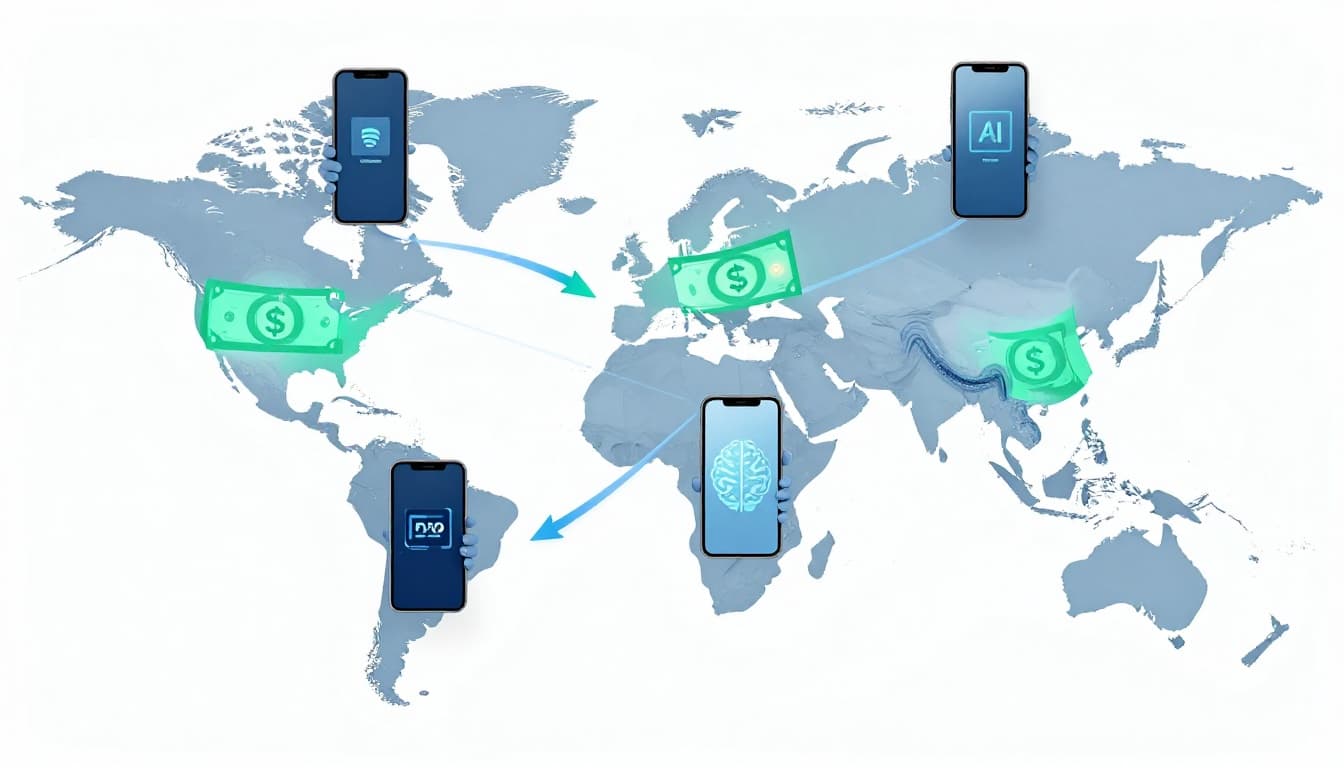
What does that mean for you? Expect easier global sending over time, but also expect more prompts when something looks unusual. That’s a trade you’ll likely accept once the app becomes your default way to pay friends back.
Conclusion
Peer-to-peer payment systems let you send money directly between people using an app, without cash or checks. They’re popular in 2026 because they’re fast, often low-cost, and built for daily life.
The smartest approach is also simple: pick trusted apps, use verification carefully, and treat payments like cash once you hit Send.
If you want smoother money moves, download one of the major P2P payment options your friends already use, then practice with a small payment first. What’s the last time P2P saved you from an awkward delay?