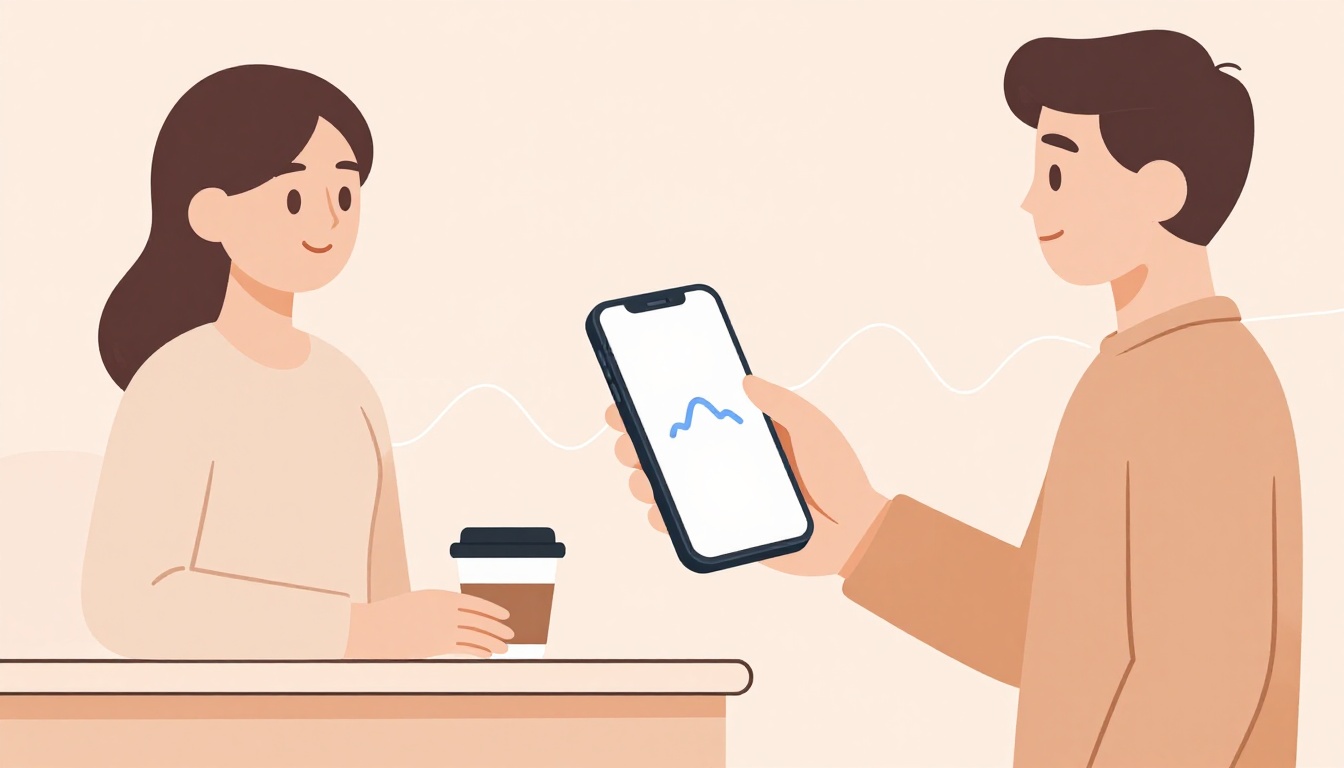
You reach for your wallet at the coffee shop, then realize you forgot cash. No stress. You tap your phone (or card), and the buy is done in seconds.
That’s the core idea behind cashless payments. Instead of handing over bills or coins, you send money through a digital payment network. Money moves from your account to the merchant, then you get a receipt on your phone.
In 2024, Americans made an average of 48 payments per month. Credit cards were 35%, debit cards 30%, cash 14%, and mobile phone payments 11%. So cash still shows up, but it’s no longer the default for most buys.
Now let’s break down how cashless payments work, what tech makes the taps possible, and what changes for your safety and daily routine.
What Cashless Payments Really Mean for Your Daily Buys
Cashless payments are electronic methods that move money digitally, without a physical exchange of bills or coins. When you pay this way, you usually store your cards or account info inside an app, then authorize the purchase at checkout.
Compared with cash, you do not count bills. You also do not make change. Instead, your payment depends on a connection between your device, the store terminal, and the payment networks behind the scenes. For many shoppers, that’s the main payoff: fewer steps, less friction, and less “did I bring enough?” worry.
This shift shows up in everyday habits. You might tap at a coffee stand, pay for parking with a phone app, or send money to a friend from your banking app. In these moments, “cash” is not disappearing because people stopped valuing money. It’s changing because the checkout experience got faster, more trackable, and easier to repeat.
It also helps that contactless is nearly everywhere. In 2026, about 96.5% of stores have contactless or tap-to-pay options. Over the last year, more than 50% of merchants saw more customers using contactless payments. After COVID, many shoppers also got used to avoiding shared surfaces, so the habit stuck.
Still, cash hasn’t vanished. Around 85% of people used cash within the last 30 days, and many consumers plan to keep using it. That’s a good reminder: cashless is replacing routine cash use for many people, not replacing every cash transaction overnight.
So what actually happens when you tap? The next section gets very practical.
The Core Idea: Digital Money Moves in Seconds
Think of a cashless payment like texting. You send an instruction, the system checks it, and the result shows up right away. The “instruction” is payment data and authorization, not paper money.
Here’s the simplified flow:
- Your phone or card sends a small payment signal to the terminal.
- The terminal passes that request into the payment networks.
- Your bank (or card issuer) approves or declines the purchase.
- The merchant receives approval and completes the sale.
- You get a confirmation, like a receipt or purchase alert.
No one passes a stack of bills. No one signs for every small purchase. Instead, a digital authorization happens in milliseconds, then the sale settles according to the payment system’s timing rules.
That’s how cashless replaces physical money in daily buys: the value transfer is still real. It just travels through accounts, not through your hands.
How Your Phone or Card Handles Payments Without Cash
Once you accept contactless, your phone or card becomes the “wallet” and the “key.” But it’s not magic. It’s a few components working in sync.
First, you set up a payment method. Then you tap or scan at checkout. Finally, the merchant terminal routes the request to the right systems for approval. The whole routine is designed to feel instant.
In the US, cashless keeps growing alongside card payments. Credit cards are also a major driver. The latest data points to $4 trillion in credit card transactions in 2026 for the first time.
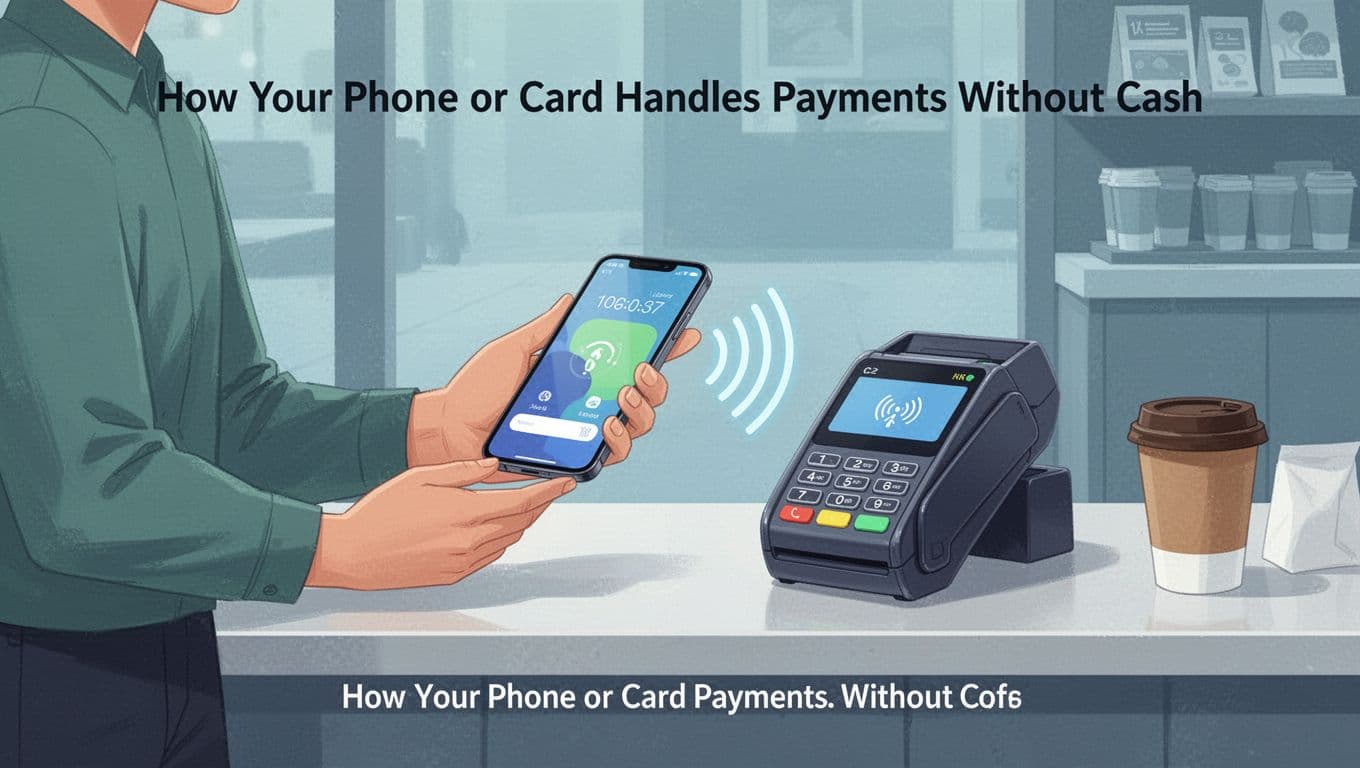
Here’s what a typical contactless card or phone payment looks like, step by step:
- Setup: You link your card to your phone wallet app (or use a contactless card directly).
- Tap: You hold your phone or card near the terminal.
- Local exchange: The device and terminal share payment data using short-range wireless.
- Approval: Your issuer checks the request and sends back “approved” or “declined.”
- Confirmation: The terminal finishes the sale, and you get a receipt (often on your phone).
Also, contactless payments often work fast because they’re built for short, local communication. You do not need to type a PIN for smaller purchases in many cases. That’s part of why taps became such a common habit.
NFC Magic: The Tech That Makes Taps Work
Most tap-to-pay payments use NFC, or near-field communication. NFC is short-range wireless. It works when two devices are close, usually a few inches.
When you tap, the terminal reads your device’s payment credentials through that short-range link. Then it sends the payment request onward. Importantly, the tap itself doesn’t need your phone’s internet connection the moment you authorize.
Security matters here too. Payment systems use encryption so the data can’t be easily read in the open. Many implementations also rely on tokenization, where your real card number is not what the terminal transmits.
If you want a merchant-friendly view of what happens at checkout, see what contactless NFC payments are for merchants.
Bank Approval Behind the Scenes
After the terminal gets the payment request, it asks the payment networks to route an approval check. Your bank or card issuer then verifies details like:
- Is the card or wallet active?
- Are you within your credit or debit limits?
- Does the account allow this type of purchase?
Because systems are built for speed, the issuer responds very quickly. If everything checks out, the approval returns to the terminal, and the merchant completes the transaction.
Also, tokenization can protect you even more. Instead of sending your real card number, systems can send a token. That token can be tied to your account behind the scenes, but it’s different from the sensitive numbers you see on your card.
In other words, cashless payments don’t remove fraud risk entirely. They often reduce some risks by controlling what gets shared at the terminal.
Top Cashless Tools Taking Over from Bills and Coins
Cashless payments are not one single method. It’s a bundle of options that replace cash in different situations.
For most people, the big categories look like this:
- Mobile wallets (like Apple Pay-style or Google Pay-style apps)
- Contactless cards (tap-enabled debit or credit cards)
- Wearables (smartwatches or rings that can pay)
- Peer-to-peer apps (sending money to people)
Each one replaces cash by sending an authorization digitally, then updating accounts once the transaction completes.
Mobile wallets and contactless cards are the most common at stores. Wearables are a convenient upgrade. Peer-to-peer apps handle the “cash between people” part, which is where cash used to be most common.
Mobile Wallets: Phone as Your New Wallet
Mobile wallets work like a protected storage space for your card. After you add a card, your phone can unlock it using security checks such as face scan or fingerprint. Then you hold your phone near the terminal.
For many purchases, you do not need a PIN. Instead, the phone’s security step plus the terminal’s short-range payment exchange is enough for approval.
A simple example: you buy a $9 sandwich. You tap your phone. You do not pull out a card. You also don’t handle cash. The merchant completes the sale, and your purchase shows up in your banking app or wallet history.
Even with this convenience, you still control the setup. You can remove a card, lock your phone, and manage alerts in your banking app.
Contactless Cards: Tap and Go Everywhere
Contactless cards include a small chip and antenna that support RFID-style communication. When you tap, the terminal reads the card quickly. Then it sends the payment authorization through the usual approval path.
These cards are popular because they work even if you forget your phone. They also feel familiar since you already use a card in your routine.
In 2026, contactless options are widely offered, with 96.5% of stores supporting tap-to-pay. That’s a major reason why cashless can replace physical money so smoothly in daily shopping.
Staying Safe When Ditching Physical Cash
Security is the big question people ask when they think about going cashless. It’s fair. Your fear is usually this: “If my phone gets stolen, can someone buy things?”
In practice, cashless methods often have built-in protections that cash doesn’t. With cash, anyone who has it can spend it. With digital payments, authorization usually depends on something only you can provide (like biometric checks) plus secure payment systems.
Here are the most common safety features behind cashless payments:
- Biometrics (face scan or fingerprint) for unlocking wallet access
- Encryption to protect payment data during transmission
- Tokenization so terminals may not receive your real card number
- Transaction rules like limits or extra checks for higher amounts
- Account alerts so you can spot unusual activity early
You also get an extra layer of monitoring. Many issuers send alerts for big purchases or unusual locations. That makes it easier to respond fast if something looks wrong.
Cash has no “login.” If you lose it, the money is gone.
Cashless payments can be locked, reversed, or disputed more often.
Even so, fraud still exists. If someone gets your credentials, they can try to use them. Also, scams like phishing can trick people into revealing information. So the best move is still simple: turn on alerts, watch your statements, and keep your phone and apps updated.
Smart Locks Like Fingerprints and Face Scans
Biometrics help because they tie payment access to you. If someone steals your phone, they still need your face or print to authorize payments in many wallet setups.
That doesn’t mean “stolen phone equals zero risk,” but it changes the default. With cash, thieves only need your lost bills. With biometrics, thieves need more access than they can casually get.
Also, most phones offer remote lock features and account-level controls. If you act quickly, you can reduce harm.
The Big Shift: Stats and What’s Coming Next
Cashless is not a straight line where every store stops taking cash tomorrow. Instead, it’s a slow switch driven by convenience, merchant adoption, and payment habits.
The data already shows the direction. In 2026, mobile payments and contactless are common, and more customers use tap-to-pay than before. Meanwhile, cash still stays in wallets, especially for people who prefer it or need it for certain situations.
So what’s coming next?
First, more transactions will happen through wallets, because that’s where convenience lives. Second, terminals and payment networks keep getting faster and more common. Third, we’ll see more “account-to-account” styles of payments in everyday life, especially for person-to-person transfers.
If you want a broader look at what US consumers do with payment methods, check US consumer payment method trends 2026. It’s a good source for the direction of travel.
At the same time, cash will likely hang around. Reasons include rural access, business habits, and people who rely on cash for budgeting. Even in a cashless-leaning future, some merchants still prefer checks or cash, and some shoppers plan to keep at least some cash on hand.
Still, the long-term trend is clear: cash use declines as digital options expand. For one view on the “why,” see why cash use is declining.
So by 2027, what should you expect? Likely more tap payments, more wallet use, and fewer moments where you need cash for routine errands. Near-cashless life will feel normal in many cities and suburbs, even if cash keeps a role elsewhere.
Here’s the key takeaway: cashless payments don’t remove money from the economy. They change how you access it at checkout.
Conclusion: Your Money Moves, Not Your Cash
When you tap to pay, you’re not just “avoiding cash.” You’re switching to a system where money authorization happens through your device, the store terminal, and your bank. That’s how cashless payments replace physical money in daily shopping.
You also get real practical benefits: faster checkout, less handling of bills, and security features like encryption and tokenization. Even better, you can still keep cash as a backup if you want.
Next time you’re out, try one cashless option instead of defaulting to cash. Then watch how quickly your routine changes. What payment method do you use most, and why? Share it in the comments, and keep an eye on more fintech tips.